Pak-Afghan relations need to be seen thru business-to-business ties
Rasheed Khalid
Published Date: July 3, 2026
Published On: The News Pakistan
Maj Gen (r) Inam ul Haque argued that Pakistan-Afghanistan relations have been viewed too narrowly through a government-to-government lens, while it primarily needs to be seen through business-to-business and people-to-people ties that bind the two countries as the paradigm of engagement.
Gen Haque was addressing a roundtable on “Pakistan-Afghanistan relations: what next? Towards pragmatic policy pathways in a shifting regional order” convened by Centre for Research and Security Studies (CRSS).
Gen Haque stressed that conflict is not the natural course of bilateral relations and called for socioeconomic considerations to take precedence over geopolitical calculations. Afghan scholar Abdul Waheed Waheed said that the deeper problem lies in the inconsistent and frequently changing policy choices pursued by both countries over the past five decades, which repeatedly generated mistrust and instability. While the current terrorism challenge placed the TTP at the centre of bilateral discourse, both sides must abandon the blame game, accept the undeniable reality of a permanent neighbourhood and pursue solutions through sustained engagement and policy consistency.
Pakistan’s former Special Envoy for Afghanistan, Asif Durrani, observed that, for Pakistan, the TTP constitutes the central issue in relations with Afghanistan, with most other bilateral tensions linked to the group’s presence inside Afghanistan and use of Afghan territory to launch cross-border attacks against Pakistani civilians and security personnel. He maintained that meaningful improvement in relations required concrete action to disarm the TTP and deny it safe havens. Drawing on his tenure, he said the Afghan authorities repeatedly offered verbal assurances, but stressed that these needed to be translated into commitments under a written and verifiable mechanism. He also described dialogue with the TTP as deeply problematic because of the group’s rejection of Pakistan’s constitutional order and its rigid ideological position.
Hamza Boltaev from Institute for Advanced International Studies (IAIS), Tashkent, Uzbekistan, said Central Asian countries had shifted toward pragmatic, economically focused engagement with Afghanistan since the Taliban takeover, resulting in greater emphasis on transport projects, connectivity and people-to-people exchanges. He noted that Uzbekistan’s political and academic circles increasingly recognised the relevance of Pakistan for greater regional stability, as a key factor in Afghanistan-related affairs and the direct consequences of Pakistan-Afghanistan relations for Central Asian stability and economic integration.
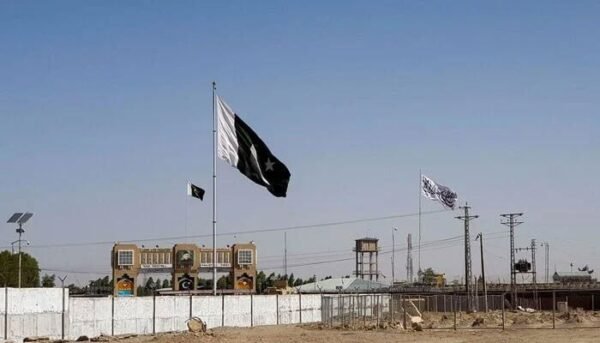
Imtiaz Gul, Executive Director, CRSS, urged policymakers to assess border closures not only through a security lens but also in terms of their long-term humanitarian, economic and regional consequences. While acknowledging Pakistan’s exposure to cross-border terrorism, he noted that the prolonged closures were not sustainable for a country seeking regional connectivity.