Aurangzeb unveils tariff overhaul plan to strengthen industry
Publishing date: 27 November 2025
Published in: Business Recorder
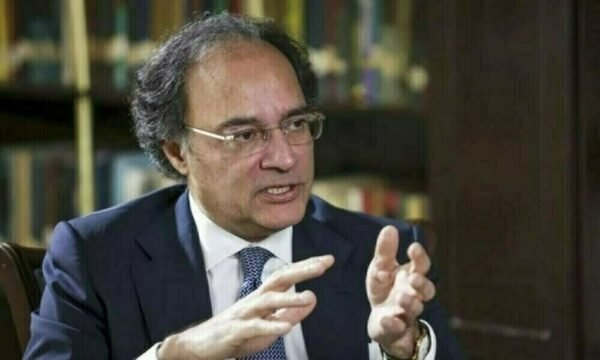
Federal Minister for Finance and Revenue, Muhammad Aurangzeb, announced on Wednesday that the government will launch a fact-based review of tariff rationalisation as part of a broader structural reform strategy aimed at stabilising the economy and supporting the formal industrial sector.
Speaking at the Pakistan Business Council’s Dialogue on the Economy 2025, Aurangzeb projected 3.5% economic growth for Pakistan this year, with a 4% growth forecast over the next two to three years and potential for 6-7% growth in the medium term, contingent on sustained progress in agriculture, manufacturing and services.
Tariff rationalisation means adjusting a country’s import and export taxes (tariffs) so they are more logical, consistent, and supportive of economic goals.
He also outlined key priorities, including the inaugural session of the 11th National Finance Commission (NFC) Award, set for December 4 and expressed confidence that ongoing engagement with provinces would continue to foster the collaborative spirit established by the National Fiscal Pact.
Aurangzeb acknowledged the impact of high taxes, financing costs and energy prices on businesses, noting that relief would be phased in.
He also revealed that Prime Minister Shehbaz Sharif had agreed to abolish export surcharges and transfer governance of the Export Development Fund (EDF) to the private sector.
He reaffirmed the government’s commitment to an ambitious reform agenda aimed at improving economic stability, boosting competitiveness, and restoring fiscal balance.
Emphasising that the focus has shifted from design to implementation, he highlighted ongoing transformations in Pakistan’s taxation system, supported by a comprehensive digitalisation strategy.
He announced that tax policy responsibilities have been shifted from the FBR to the finance ministry, which is setting up a fully operational Tax Policy Office and an Advisory Council, initially with academics and later private-sector representatives.
He also emphasised that continuous engagement with chambers and sectoral bodies, replacing the traditional annual budget consultations, will lead to more evidence-based and analytically driven policy development.
Aurangzeb highlighted progress in right-sizing the government, with half of federal ministries reviewed and 54,000 vacant posts abolished, saving Rs56 billion annually.
He confirmed the merger or closure of several ministries and organisations, reaffirming the government’s commitment to these reforms despite ongoing challenges.
The minister highlighted Digital Pakistan as a key priority, closely monitored by the prime minister. The initiative aims to boost digital payments, develop digital infrastructure, and digitise government transactions.
He emphasised the shift from a cash-based to a documented economy, with targets for merchant digitisation, financial inclusion, and enhanced government transparency.
On debt management, he announced that the Debt Management Office is being modernised to international standards, already extending Pakistan’s average time-to-maturity to four years, reducing refinancing risks, and lowering debt servicing costs.
He introduced a new contributory pension scheme, operational since July 2024, which has already enrolled over 9,000 new government employees, alongside parametric reforms to reduce pension liabilities.
Regarding the defence forces, he confirmed that the contributory system would be introduced next year, acknowledging their unique service requirements.
Aurangzeb announced that Pakistan is set to issue its inaugural Panda Bond before the Chinese New Year. He also confirmed progress on a regulatory framework for the digital and crypto economy, with the Pakistan Virtual Asset Regulatory Authority now operational to formalise crypto activities under a structured governance model.
He noted stabilised monthly remittances through formal channels, strong performance of the Roshan Digital Account, and improved institutional flows under the SCRA, following the introduction of a lock-in period to reduce short-term arbitrage activities.
In response to concerns over high taxation, energy costs, and expensive financing, he acknowledged the challenges faced by industries.
He assured that easing monetary conditions would reduce financing costs but encouraged businesses to diversify into capital markets for longer-tenor, more competitive financing.
He also reaffirmed the government’s commitment to addressing structural issues in taxation and energy, with ongoing reviews to assess the impact of recent tariff adjustments.
Addressing concerns from foreign investors about the investment climate and security, he emphasised that national security must remain a top priority.
He stressed that security, macroeconomic stability, and profit repatriation are vital for attracting global investment. He reassured that the government will continue reviewing policies transparently, based on evidence, and stay open to feedback from the business community.
He reiterated the government’s commitment to evidence-based policymaking, private-sector collaboration and ongoing reforms to ensure long-term economic growth.
He highlighted progress in taxation, digital transformation, state-owned enterprise restructuring, and debt management as key to economic sustainability.
He also noted early signs of recovery in sectors such as cement, fertiliser, automobiles, and manufacturing, while pointing to renewed interest from global companies in energy, mining, and technology as signs of growing confidence in Pakistan’s economic direction.
Additionally, he updated on restructuring the Debt Management Office, projecting potential savings of up to Rs1 trillion through improved debt management.
He cautioned that geopolitical tensions, trade fragmentation, and supply chain readjustments create significant uncertainties. “I wouldn’t call it disruption, but readjustment,” he said, emphasising that every country, including Pakistan, must build fiscal and external buffers to better withstand exogenous shocks.
Ex-finance minister Miftah Ismail warned that Pakistan’s deficits are unsustainable, suggesting that 80% of incremental revenue should be allocated to the federal government until the deficit falls below 3% of GDP.
Economist Kaiser Bengali argued that the federal government had not reduced its ministries since the 18th Amendment, proposing that the divisible pool be split between direct and indirect taxes.