Pakistan to achieve around 4 percent GDP growth in current FY: Ahsan Iqbal
Publishing date: 02 January 2026
Published in: The Nation
Pakistan’s literacy rate increased to 63 percent from the previous 60 percent, number of out-of-school children dropped from 30 percent to 28 percent, while household and individual internet users increased to 70 percent and 57 percent, respectively from 2018-19 to 2024-25.
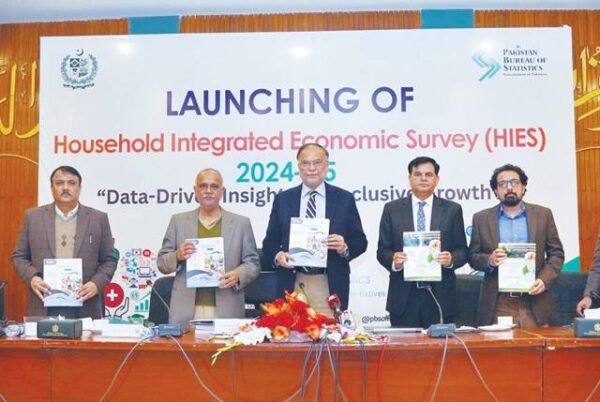
The literacy rate has increased to 63% from 60% in 2018-19, with Punjab recording the highest level at 68% and Balochistan the lowest at 49%, revealed Household Integrated Economic Survey (HIES) 2024–25 conducted by Pakistan Bureau of Statistics. Federal Minister for Planning, Development & Special Initiatives Ahsan Iqbal has officially launched the first ever digital Household Integrated Economic Survey (HIES) 2024–25.
Addressing the launch ceremony, the minister termed the recent GDP growth of 3.71% during the first quarter of the ongoing fiscal year 2025-26 encouraging and expressed optimism that Pakistan would achieve around 4% GDP growth during the current fiscal year. He said the government is pursuing a cautious and responsible economic policy, with a clear focus on ensuring sustainable and consistent growth in the coming years.
He pointed out that the survey shows several positive economic and social indicators, reflecting gradual improvement. He said Pakistan must urgently address its education emergency, aiming to raise the education participation rate to 90 percent. He underscored that addressing the literacy crisis on an emergency basis is essential, noting that no country can truly develop without near-universal literacy, while Pakistan still has approximately 25 million out-of-school children. Household Integrated Economic Survey (HIES) has been monitoring socio-economic indicators at the national and provincial levels since 1963. The last survey was conducted in 2018-19, providing detailed data on income and consumption patterns. According the survey, the proportion of out-of-school children has decreased to 28% from 30%, with the lowest rate in Punjab at 21% and the highest in Balochistan at 49%.
In health sector, the survey revealed that Neo-Natal Mortality Rate has decreased from 41 to 35 per thousand live births. Infant Mortality Rate has decreased from 60 to 47 per thousand live births. In information, communication and technology (ICT), the survey revealed that household internet access has increased from 34% to 70%., highest in Khyber Pakhtunkhwa with 77% and lowest in Sindh with 67%. Household mobile or smartphone ownership has increased from 95% to 96%, with Balochistan on the top with 98% and Sindh lowest with 95%. Similarly, individual internet usage has increased from 17% to 57%, with KP highest with 56% and lowest in Balochistan with 43%. Individual mobile or smartphone ownership increased from 45% to 50%, with Khyber Pakhtunkhwa highest with 51% and lowest in Balochistan with 42%.
In population welfare, the survey said that total fertility rate has decreased to 3.6 per women in 2024-25 from 3.7 in 2018-19. Proportion of women aged 15-49 years who make their own informed decisions regarding contraceptive use & reproductive health care has increased to 56% from 53% in 2018-19. Adolescent birth rate; aged 15-19 years per 1,000 women has decreased to 48% in 2024-25 from 54% in 2018-19.
The survey results of the housing, water and sanitation revealed that use of clean fuels—such as natural gas, LPG, biogas, solar energy, and electricity for clean heating, lighting, and cooking—increased from 35% to 38%. Access to tap water increased from 18% to 22%, use of filtration plants increased from 9% to 10%, access to flush toilets improved significantly from 80% to 89%, while households with no toilet facility reduced from 12% to 7%. Hybrid and solar-only lighting use increased to 11% and 7% respectively, the survey revealed. On income and consumption pattern, the survey said that household income increased by 97.81% from Rs 41545 to Rs 82179 (Nominal in Rs), while household consumption increased by 113% from Rs 37159 to Rs 79150 (Nominal in Rs). Major part of the household consumption goes to food (37%), housing &fuel (26%) followed by restaurants and hotels (6.63%), clothing and footwear (6.28%) and transport (6.21%) at national level.